2 Days That Decide Bitcoin's Bull Run as Weekly Close Sets the Tone
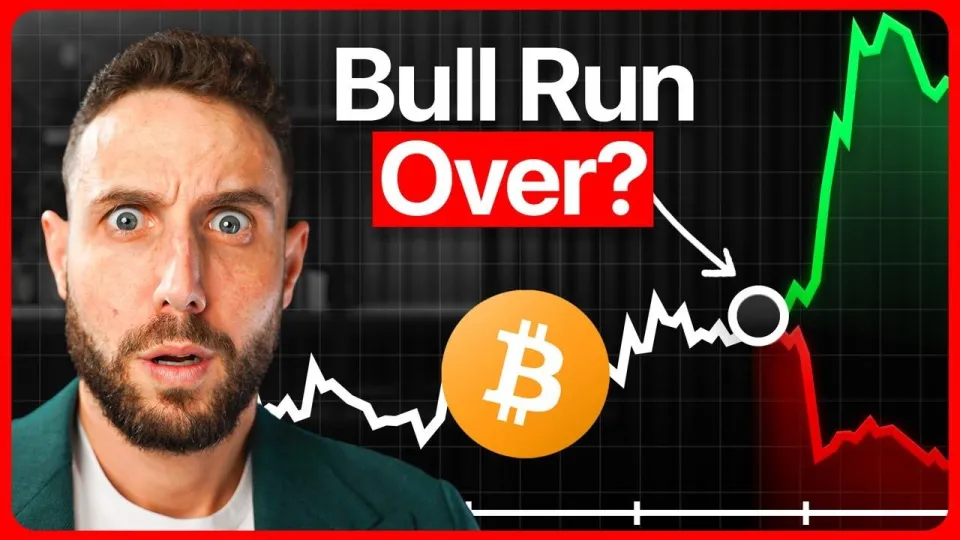
Video: Bitcoin Has 2 DAYS to Save the Crypto Bull Run
Need articles like this for your video? They help promote it on YouTube and Google — order them in the Telegram bot @sat_sit_bot. It writes articles around your video, embeds the video and publishes them on popular niche websites (no ads). Your first 50 articles are free.
· based on the channel EllioTrades
Bitcoin has roughly two days to defend the level that keeps the crypto bull run intact: the weekly close is the trigger, and a failure to hold support would shift the market from a pullback to a deeper correction. The setup is binary — hold and the path back toward 100K stays open, lose it and the next stop is a liquidity sweep lower before any real bounce. Traders who want to position around the outcome can use the Kalshi registration bonus to take a view on where the close lands.
Why the weekly close matters more than any daily candle
A weekly close is the only print that forces both spot and derivatives desks to reprice risk at the same time. Daily wicks get bought and sold by the same short-term crowd; a weekly candle below support changes the frame for swing traders, funds and systematic models that only rebalance on the weekly timeframe.
That is why the next 48 hours are being treated as a decision point rather than noise. Three things are being watched simultaneously:
- Whether BTC closes the week above the support zone that has held on every retest since the last leg up.
- Whether the close comes with expanding volume or on a thin weekend tape where market makers are absent.
- Whether BTC dominance keeps climbing while price chops — the classic signature of altcoins bleeding while Bitcoin holds.
If support holds, the base case is a range that resolves upward into a retest of 100K. If it breaks, the more likely sequence is a fast flush that takes out obvious stop clusters, followed by a reclaim attempt from lower levels.
The levels that define the bull case
The bull case is defined by two prices: the support that must hold on the weekly, and the 100K region that must be reclaimed to confirm the trend.
- Support holds: a weekly close above the defended zone keeps the higher-low structure alive and keeps the 100K retest in play for November.
- Support breaks: the market moves into a sweep scenario, with the 97K area cited as a plausible liquidity target before a base forms.
- Reclaim of 100K: this is the confirmation signal. A push through 100K after a dip is what turns a scary retracement into a buying opportunity rather than a trend change.
The nuance traders keep missing is that the depth of the dip matters less than the structure of the recovery. A drop to 97K that is bought aggressively and reclaimed within days is bullish. The same drop that produces a lower high and a failed reclaim is the start of something else.
How to trade a make-or-break weekly candle
A binary setup should be traded with a plan, not a prediction. The practical approach is to split exposure and let the close decide which half does the work.
- Do not add size before the close. Entering mid-candle means paying for uncertainty; waiting costs a few percent but removes the coin-flip risk.
- Predefine the invalidation. Decide in advance which weekly close would prove your thesis wrong, and size the position so that outcome is survivable.
- Scale into support, not into strength. If you want exposure to the hold scenario, buy in tranches near support with stops below the sweep zone, not after a green candle.
- Keep a cash reserve for the flush. The scenario where support breaks tends to produce the best entries of the month, but only for traders who still have capital at that moment.
- Watch dominance as a filter. If BTC dominance is rising while Bitcoin chops, altcoin longs are fighting the tape regardless of what BTC does next.
Altcoins: which coins look buyable if support holds
Altcoin exposure only makes sense as a second-order bet on Bitcoin holding its weekly support. If BTC closes weak, altcoins typically lose more in percentage terms, and the lower-low scenario spreads across most of the market.
The coins worth watching are the ones with relative strength during the chop — assets that stopped making lower lows while BTC was testing support. That relative strength is the filter; the trigger is a Bitcoin weekly close that holds. Names discussed in the trading plan include NEAR, where the short side is contested, and newer privacy-adjacent tokens such as Midnight that viewers keep flagging as a candidate for a larger move than Zcash.
A workable structure for altcoin buys:
- Build a watchlist of five to eight names that held their range during the BTC pullback.
- Wait for the weekly close, then buy the strongest two or three rather than spreading capital across the whole list.
- Size positions so that a full retrace to the pre-breakout level is an annoyance, not a portfolio event.
- Exit or cut any name that makes a lower low while BTC holds — that is idiosyncratic weakness, not market beta.
The doubts traders are actually voicing
The most common objection is that one retracement flipped the entire crowd from euphoric to bearish, which is itself a contrarian signal. Sentiment that turns on a single red week is usually noise, but it also means positioning is lighter than it was at the highs.
The second objection is mechanical: weekend liquidity. With market makers thinner on Saturdays and Sundays, a weekend push or flush says less about real demand than the same move on a Monday. That argues for waiting for the weekly close rather than reacting to a Sunday wick.
A third concern is the wish for a deeper discount. Wanting a major setback to buy cheaper is understandable, but a confirmed bull that forces accumulation at higher prices raises the probability of larger gains — invalidating the trend to get a better entry cuts both ways.
Finally, there are catalysts outside crypto price action: index providers reviewing whether digital-asset treasury companies belong in global benchmarks, and macro equity weakness that has not fully played out. Those are separate risks from the weekly candle and should be tracked on their own calendar.
Tools and links mentioned in the breakdown
- Kalshi registration with the $50 bonus — event contracts on market outcomes.
- Liquid trading with 10% off fees — derivatives execution.
- WEEX deposit bonus up to $4,000 — exchange promotion for a $100 deposit.
- fomo trading journal — the public trading journey.
- EllioTrades on X — trade updates and chart posts.
Bottom line
Bitcoin's next weekly close is the gate for the entire crypto market: hold support and the 100K retest stays live, break it and the 97K sweep becomes the base case before any recovery. The trade is not a prediction but a plan — wait for the close, predefine invalidation, scale into support and keep dry powder for the flush. Altcoins are a second-order bet that only pays if BTC holds, filtered by relative strength during the chop. EllioTrades lays out this trading plan for BTC and altcoins in the video breakdown, and traders who want to position around the outcome can start with the Kalshi bonus link.
Key takeaways
- Bitcoin's weekly close is the single most important trigger for whether the crypto bull run continues or breaks down.
- A close below key support would open the door to a deeper sweep toward the 97K area before any recovery.
- A reclaim of 100K in November is framed as the signal that would confirm the bull case again.
- Traders are split between buying a dip into support and waiting for a confirmed higher low.
- BTC dominance rising is the main risk for altcoins, with lower lows possible across most alts.
Source: Bitcoin Has 2 DAYS to Save the Crypto Bull Run · Markdown version
Questions & answers
What exactly happens if Bitcoin fails to hold support on the weekly close?
The bull structure weakens and the market shifts into a sweep scenario, with the 97K area as a plausible liquidity target before a base forms. Altcoins typically fall harder in that case, and lower lows spread across most of the market. The recovery attempt after the flush is what determines whether it was a dip or a trend change.
Is it better to wait for a confirmed 100K reclaim than to buy the dip?
Both approaches are valid but serve different goals. Buying support in tranches offers a better average price if the hold scenario plays out, while waiting for a 100K reclaim trades some upside for confirmation that the trend is intact. Sizing should reflect which risk you are accepting.
Why do weekend candles matter less than the weekly close?
Market makers and institutional desks are largely absent on weekends, so moves happen on thinner liquidity and can exaggerate both directions. A Sunday wick is poor evidence of real demand; the weekly close aggregates the whole week and forces desks to reprice risk at once.
Which altcoins are worth watching if Bitcoin holds?
The filter is relative strength: names that stopped making lower lows while BTC tested support. NEAR is one contested example, and newer privacy-adjacent tokens such as Midnight are being flagged by viewers as candidates for a larger move. Buy the strongest two or three after the close rather than spreading capital across the whole list.